

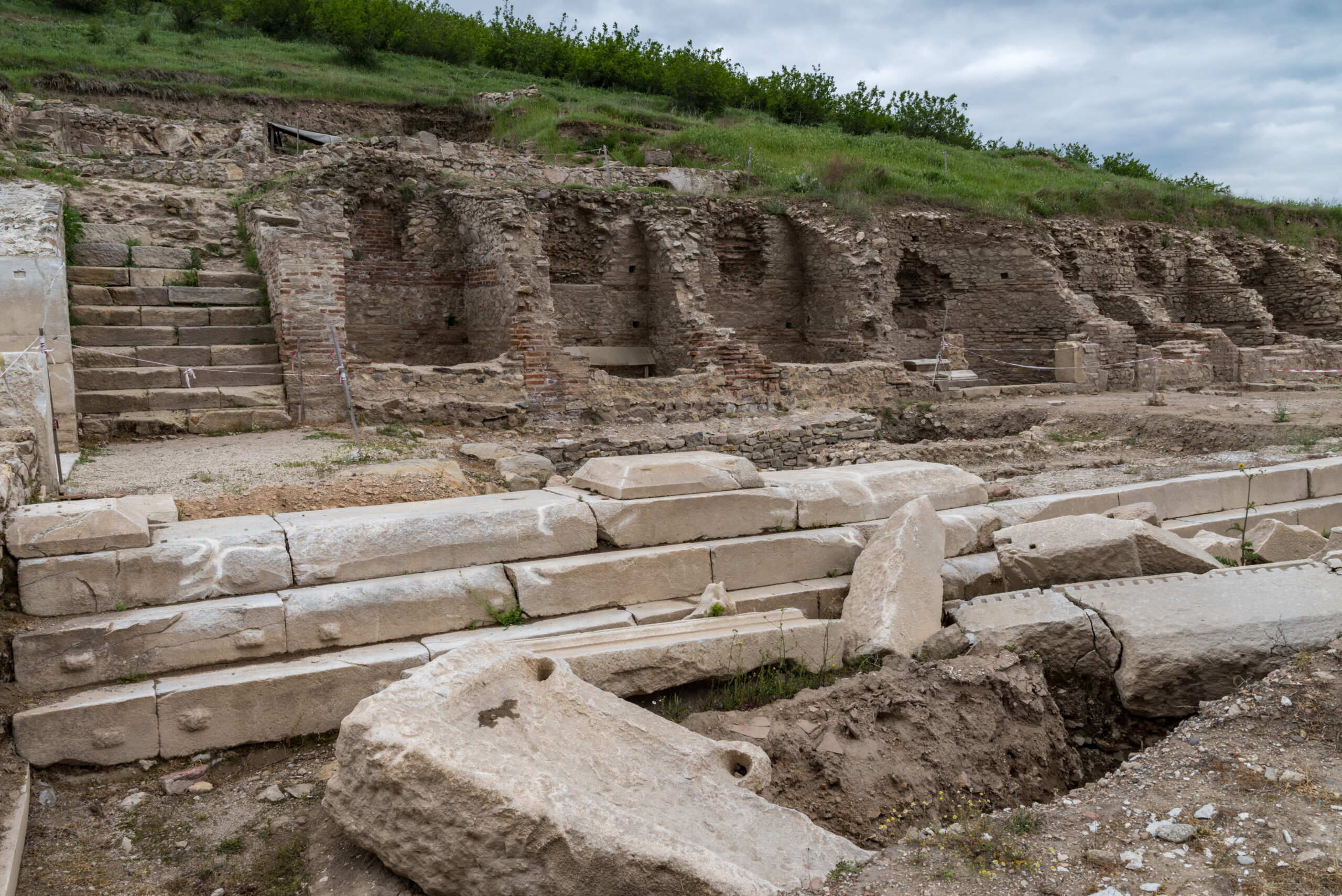
Heraclea Sintica was an ancient Hellenistic and Roman city located in what is today southwestern Bulgaria, near the village of Rupite (close to the Struma/Strymon River and the modern border with Greece).
Key facts
- Founded: Late 4th century BC, likely during the reign of Philip II of Macedon
- Name origin: Heraclea — named after Heracles, a common Macedonian practice
- Sintica — from the Sintians (Sinti), a Thracian tribe inhabiting the region
- Cultural identity: Macedonian–Hellenistic city with strong Greek urban traditions, later fully integrated into the Roman Empire
- Status: Became a significant Roman city in the province of Macedonia
Historical importance
- The city is mentioned by ancient authors such as Livy, who places it in the context of Roman–Macedonian conflicts.
- Its exact location was uncertain for centuries until a stone inscription discovered in 2002 explicitly named Heraclea Sintica, confirming the site near Rupite.
- Archaeology has revealed:
- Streets, buildings, and inscriptions
- Evidence of earthquake destruction, likely in the 4th–5th century AD, after which the city declined and was abandoned
Why it matters
Heraclea Sintica helps historians understand:
- Macedonian expansion into Thrace
- The interaction between Greek, Thracian, and Roman cultures
- Urban life in the northern Aegean world.
